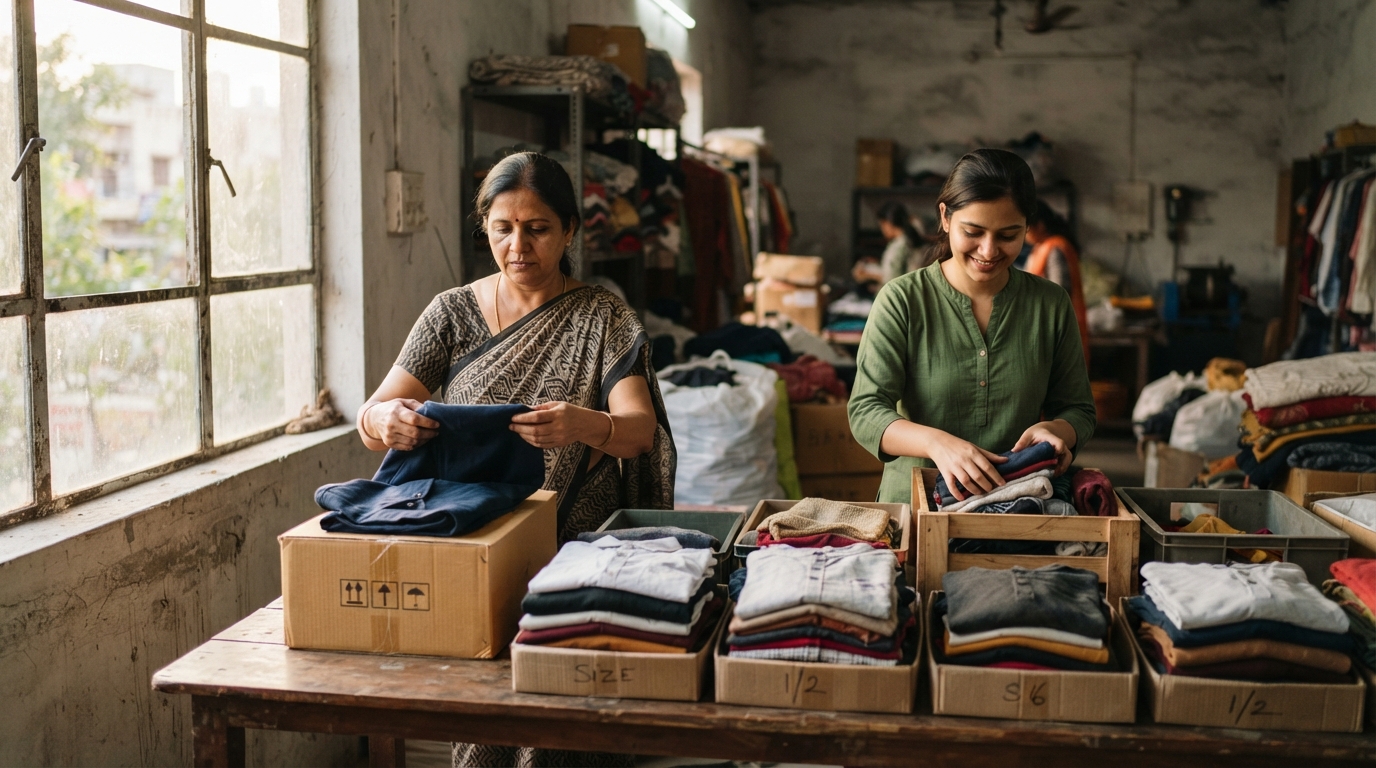
Short answer:
• A strong garment distribution system relies on structured sorting, needs-based matching, and verified delivery through partner networks rather than ad hoc handouts.
• In the textile trade, distribution quality depends on classification by age, gender, size, and seasonal need before clothing reaches any beneficiary.
• Nonprofit organizations in India, including Ratna Nidhi Charitable Trust, demonstrate how well-documented processes help ensure accountability in large-scale clothing distribution.
A reliable system for moving clothing from donors to recipients depends on more than collection volume. Garment distribution works best when every stage, from intake to final handover, follows a documented sequence that protects both donor intent and recipient dignity. Without this structure, usable clothing often ends up misallocated, delayed, or discarded before it reaches anyone who needs it. Organisations such as Ratna Nidhi Trust show how a structured approach can get donated garments to the people who need them.
The sorting stage is where most distribution systems succeed or fail. Clothing arriving from donors, retailers, or manufacturing surplus needs to be separated by wearable condition before anything else happens.
Core Stages of an Effective Distribution Process
A functional garment distribution chain generally moves through four measurable stages:
1. Collection – garments are received from individual donors, corporate partners, or production overruns.
2. Sorting and classification – items are grouped by age group, gender, size, and season to match likely recipient needs.
3. Packing and transport – sorted garments are packed and routed to partner institutions, schools, or community organizations.
4. Distribution and verification – local partners hand out garments and typically document the handover with beneficiary lists or photographs.
This structure mirrors how one established Indian model works. The method of distribution involves the garment department sorting clothes by group, age, sex, and size, removing torn clothes, counting, packing, and transporting to the agency destination. Care is taken to provide timely help to beneficiaries, including woolens and sweaters in winter and cotton in summer.
Why Verification and Follow-Up Matter
A distribution network is only as trustworthy as its reporting trail. A representative typically maintains follow-up and, when possible, personally attends distribution. The concerned organization then submits a signed certificate of distribution of clothes along with the list of beneficiaries and photographs.
This documentation step separates organized distribution from informal clothing drives. It allows donors and partner NGOs to confirm that garments reached intended recipients rather than being resold or lost in transit. Organized models also route garments through multiple intermediary organizations, which distribute garments through a network of various institutions, NGOs, schools, and colleges working with the poor and underprivileged, who then distribute the garments to individual beneficiaries.
| Distribution Approach | Sorting Standard | Delivery Tracking |
| Informal clothing drive | Minimal or none | Rarely documented |
| Retailer donation bin | Basic quality check | Limited to collection point |
| Structured NGO network | Age, gender, size, season | Certificates and beneficiary lists |
Scale and Seasonal Demand in India
Garment distribution volumes in India fluctuate with seasonal need and disaster response cycles. Textile waste and surplus clothing management is a recognized concern nationally, and the Ministry of Textiles tracks domestic production and consumption patterns that influence how much usable clothing becomes available for redistribution each year.
Community-level programs in India illustrate how this plays out in practice. One recorded distribution involved 500 garments donated to a Mumbai-based group, which were then distributed to villages in Gujarat. Separately, a garment project running in Banaskantha District for the past three years has distributed garments to thousands of rural Gujarati people. These examples show distribution extending well beyond a single city once a network of partner organizations is established.
Business Info
Ratna Nidhi Charitable Trust runs a clothes and garment distribution program in India, providing usable clothing to underprivileged children, women, and men across communities. The organization accepts a range of clothing, including shirts, pants, saris, kurtas, and warm attire, with both adult and children’s garments appreciated provided they are clean and in good condition.
Frequently Asked Questions
What is garment distribution in the textile trade context? It refers to the organized process of moving clothing, whether retail surplus or donated items, from collection points to recipients through sorting, packing, and verified handover rather than direct, untracked giveaways.
How is clothing sorted before distribution? Garments are typically separated by age group, gender, and size, with damaged or unusable items removed before packing and transport to partner locations.
Why do seasonal factors matter in distribution planning? Matching garment type to season, such as prioritizing warm clothing before winter, ensures recipients receive items they can use immediately rather than generic donations.
Are distribution records necessary for accountability? Yes, beneficiary lists and distribution certificates allow donors and partner organizations to confirm that garments reached the intended communities.
Final Note
Readers researching clothing distribution networks in India can Get directions to Ratna Nidhi Charitable Trust for published location details.