The gist:
-
Land clearing follows a defined sequence: site assessment, permitting checks, vegetation removal, debris management, and grading.
-
Skipping steps like utility locates or erosion control can lead to property damage, fines, or drainage problems later.
-
Local conditions in Warner Robins, GA, including clay soils and seasonal rainfall, affect how clearing projects should be sequenced.
Safe and effective land clearing requires a defined process: assessing the site, confirming permits and utility locations, removing vegetation in a controlled sequence, and managing debris and grading before construction begins. Skipping any of these stages increases the risk of erosion, equipment damage, or regulatory delays.
Land clearing is often treated as a single task, but it actually involves distinct phases that affect everything from soil stability to long-term drainage. Property owners preparing a lot for building, agriculture, or fire mitigation benefit from understanding what each phase involves before equipment arrives on site.
Site Assessment and Planning
A clearing project starts with a walk-through to identify tree density, slope, soil type, and any standing water or wetland indicators. This step determines which equipment is appropriate and whether the project needs to be phased to limit soil exposure.
Planning should also account for:
-
Property boundaries and setback requirements
-
Protected or heritage trees that may require preservation
-
Existing drainage patterns that could be disrupted
-
Access points for heavy machinery
Georgia’s climate brings heavy spring and summer rainfall, which makes timing a practical consideration. The National Weather Service tracks regional precipitation patterns that can inform when clearing and grading work is least likely to face washout conditions.
Permits, Utility Locates, and Regulatory Checks
Before any vegetation is removed, utility locates confirm the position of underground gas, water, and electrical lines. Contacting a utility locate service is standard practice nationwide and prevents costly line strikes during excavation or stump removal.
Local permitting requirements vary by project size and intended land use. Clearing near wetlands, floodplains, or waterways may trigger additional review, since disturbed soil near these areas can affect runoff quality. Confirming requirements with the relevant county or municipal office before work begins avoids stop-work orders mid-project.
Vegetation Removal and Debris Management
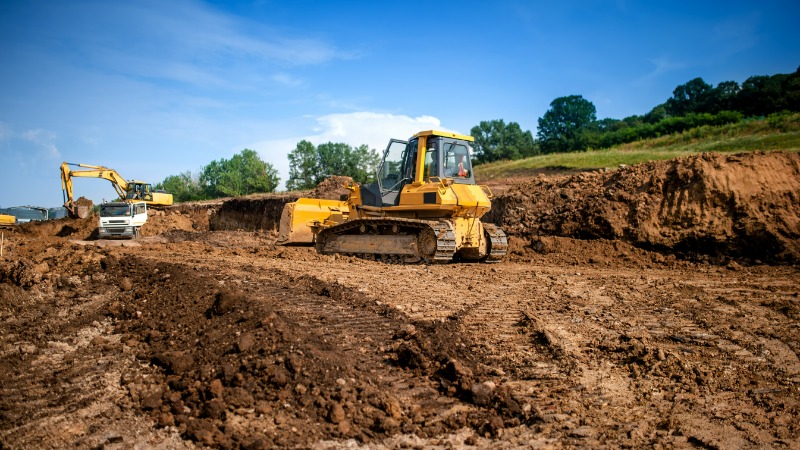
Once permits and locates are confirmed, clearing typically proceeds in this order:
-
Removal of underbrush and smaller vegetation
-
Felling and removal of larger trees
-
Stump grinding or extraction
-
Root raking to clear remaining debris
-
Hauling or processing of cleared material
|
Clearing Method |
Best Suited For |
Typical Output |
|
Selective clearing |
Sites needing some tree retention |
Partial canopy removed, select trees preserved |
|
Full clearing |
New construction or large-scale grading |
Complete vegetation and stump removal |
|
Forestry mulching |
Brush-heavy or overgrown lots |
Mulched ground cover, reduced erosion risk |
Debris handling matters as much as removal. Burning, hauling, or mulching on-site each carry different cost and regulatory implications, and open burning is often restricted or requires a permit depending on local fire codes.
Grading, Erosion Control, and Site Stabilization
After vegetation is cleared, the site is typically graded to establish proper drainage before any construction or planting begins. Bare soil left exposed after clearing is vulnerable to erosion, particularly during Georgia’s wetter months.
Temporary measures such as silt fencing, seeding, or erosion control blankets are commonly used to stabilize soil until permanent landscaping or construction resumes. These steps protect neighboring properties and waterways from sediment runoff, which is a common concern addressed in state and local stormwater regulations.
Business Info: Based in USA, we serve customers across Warner Robins, GA, working within the sequence of assessment, permitting, clearing, and stabilization described above.
Frequently Asked Questions
How long does a typical land clearing project take? Timelines depend on lot size, vegetation density, and weather conditions, with smaller residential lots generally completed faster than multi-acre sites requiring phased grading.
Is a permit always required for land clearing? Not always, but projects near wetlands, waterways, or within certain zoning districts commonly require review, so checking with local authorities before work begins is advisable.
What happens to trees and debris after clearing? Material may be hauled off-site, mulched for reuse as ground cover, or processed according to local regulations, depending on volume and site access.
Can clearing affect drainage on neighboring properties? Yes, improperly graded or stabilized sites can redirect runoff, which is why erosion control measures are typically part of the final clearing phase.
Final Notes
Current service area information for Vaquero Landworks is published for reference by property owners planning a project.