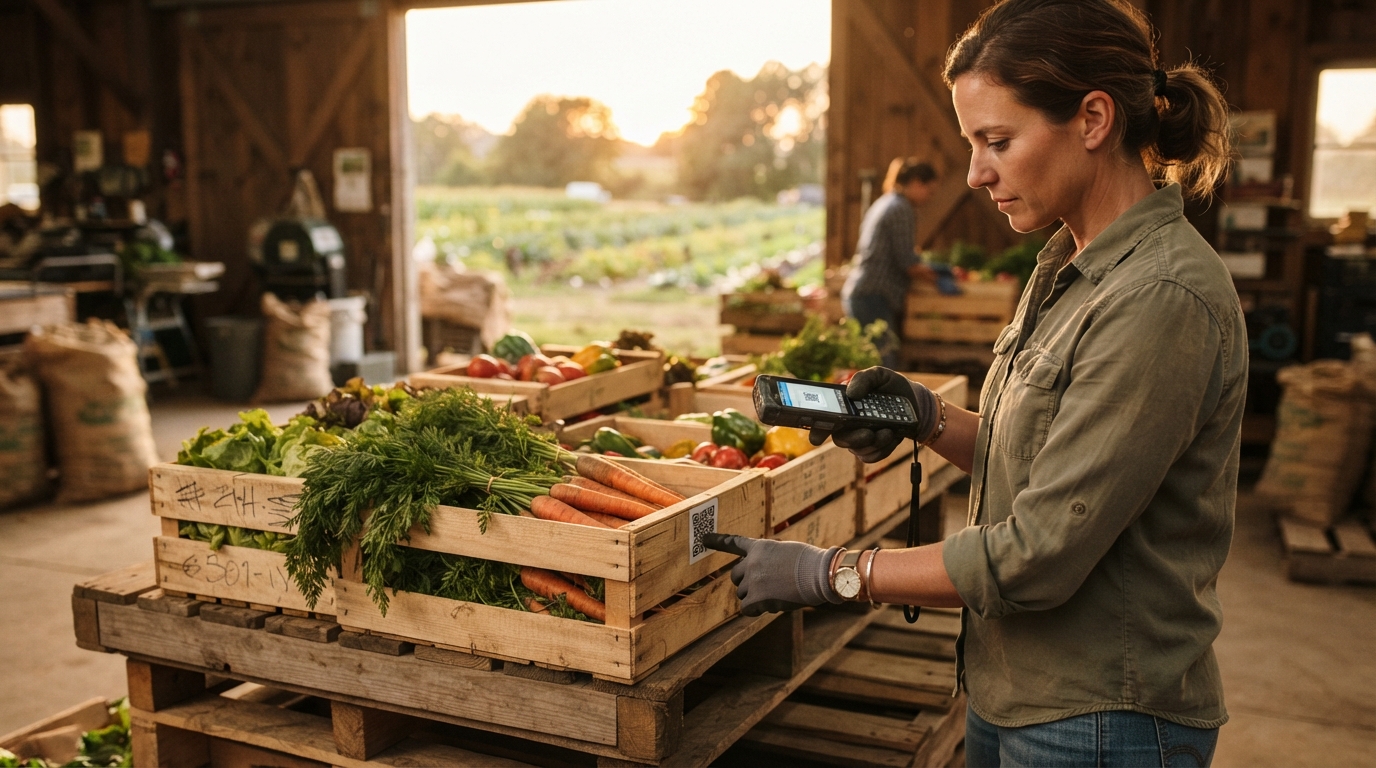
Simply put:
• A reliable traceability system links batch, lot, and origin data at every supply chain step so products can be tracked from source to final destination.
• Farm and food businesses use these systems to meet buyer requirements, manage recalls faster, and document certification or origin claims.
• Software-based tracking replaces manual recordkeeping with searchable digital records tied to each shipment or harvest.
A traceability system is the combination of recordkeeping practices and software that allows a business to track a product’s origin, movement, and handling from the point of harvest or production through to the final customer. For agricultural and food businesses, building one that holds up under audit or recall conditions takes more than a spreadsheet; it requires structured data capture at every handoff point. To see how this works in practice, Contact SourceTrace.
A traceability system built for agriculture typically connects farm-level data, such as harvest dates, batch numbers, and field origin, with downstream processing, packing, and shipping records. SourceTrace traceability system helps farms and agribusinesses monitor harvests, batches, and origin, offering reliable food and flower tracking for sustainable supply chains. That kind of connected recordkeeping is what distinguishes a functioning traceability program from informal, paper-based tracking.
Why Traceability Infrastructure Matters Now
Regulatory and buyer pressure has made structured tracking less optional for food and agriculture operations across the USA. Federal recordkeeping standards under the Food Safety Modernization Act set clear expectations for high-risk foods, even as timelines shift.
• Businesses that manufacture, process, pack, or hold foods on the FDA’s Food Traceability List must maintain enhanced records tied to each shipment.
• The compliance deadline for FSMA Rule 204 was pushed back, and according to FDA food traceability rule guidance , in 2025 the FDA proposed a 30-month delay of the required compliance date, moving the compliance date to July 20, 2028.
• Congress reinforced that timeline; the Continuing Appropriations Act passed in November 2025 directed the FDA not to enforce the rule before July 20, 2028.
The extended deadline does not remove the underlying need for traceable recordkeeping. Buyers, certifiers, and export markets frequently require batch-level documentation well before any federal enforcement date arrives, which is why many operations are building systems now rather than waiting.
Core Components of a Dependable System
A functional traceability setup generally includes a few consistent building blocks, regardless of the crop or product category involved.
1. Farmer and field-level data capture – profiles, GPS or GIS plotting, and certification status tied to each grower or plot.
2. Batch and lot identification – unique codes assigned at harvest or processing so every unit can be traced backward or forward.
3. Chain-of-custody records – documentation of each transfer point, from farm to warehouse to processor to retail.
4. Label and scan-based verification – QR codes or barcodes that let downstream partners or consumers confirm origin.
SourceTrace’s traceability software provides full visibility of the agricultural value chain, bringing the features of a complete food traceability system with the potential to bring efficiency into supply chains. Systems built this way support standards used across the industry; they support GS1 and other standards that buyers and regulators commonly reference.
Comparing Manual Records vs. Software-Based Traceability
| Factor | Manual / Paper Records | Software-Based Traceability System |
| Data retrieval speed | Hours to days, manual search | Minutes, searchable by lot or batch |
| Recall response | Difficult to isolate affected batches | Faster isolation of affected lots |
| Audit readiness | Inconsistent documentation | Centralized digital records |
| Scalability across sites | Labor-intensive to maintain | Expands across multiple facilities or farms |
Operations evaluating a shift from manual logs to digital tracking should weigh how quickly each approach can produce verifiable records when a buyer, auditor, or regulator requests them, since response time is often the deciding factor during a recall.
Frequently Asked Questions
What is the difference between traceability and track-and-trace? Traceability refers to the overall ability to document a product’s full history and origin, while track-and-trace typically describes the real-time movement tracking component within that broader system.
Does every food business need a formal traceability system? Requirements vary by product type and supply chain role; businesses handling foods on the FDA’s Food Traceability List face specific recordkeeping obligations, while others adopt traceability for buyer or certification requirements.
How does a traceability system help during a recall? A system with batch-level data allows a business to identify exactly which lots or shipments are affected, narrowing the scope of a recall instead of pulling broader inventory ranges.
Can a traceability system support certification or export requirements? Yes, documented origin and handling records are commonly requested for organic, fair trade, or export certifications, and digital systems make that documentation easier to compile and share.
Building a dependable traceability system is a practical response to tightening regulatory expectations and buyer demands across the food and agriculture sector in the USA, and the process generally starts with mapping existing data gaps before selecting a software platform.
Business Information and Next Steps
SourceTrace is a technology company focused on agricultural traceability and farm management software, offering platforms that connect data across the farm-to-retail supply chain. Readers can find additional operational details through SourceTrace’s Google Business Profile, which lists published business information.
For published location and contact details, readers can View SourceTrace’s Google Business Profile.