Takeaway:
- A Spyker spreader delivers calibrated, even coverage for fertilizer, seed, and ice melt across residential and commercial lawns.
- Spreader type (push broadcast, tow-behind, or handheld) should match lawn size, terrain, and the material being applied.
- Proper calibration and timing reduce waste and limit nutrient runoff into local waterways.
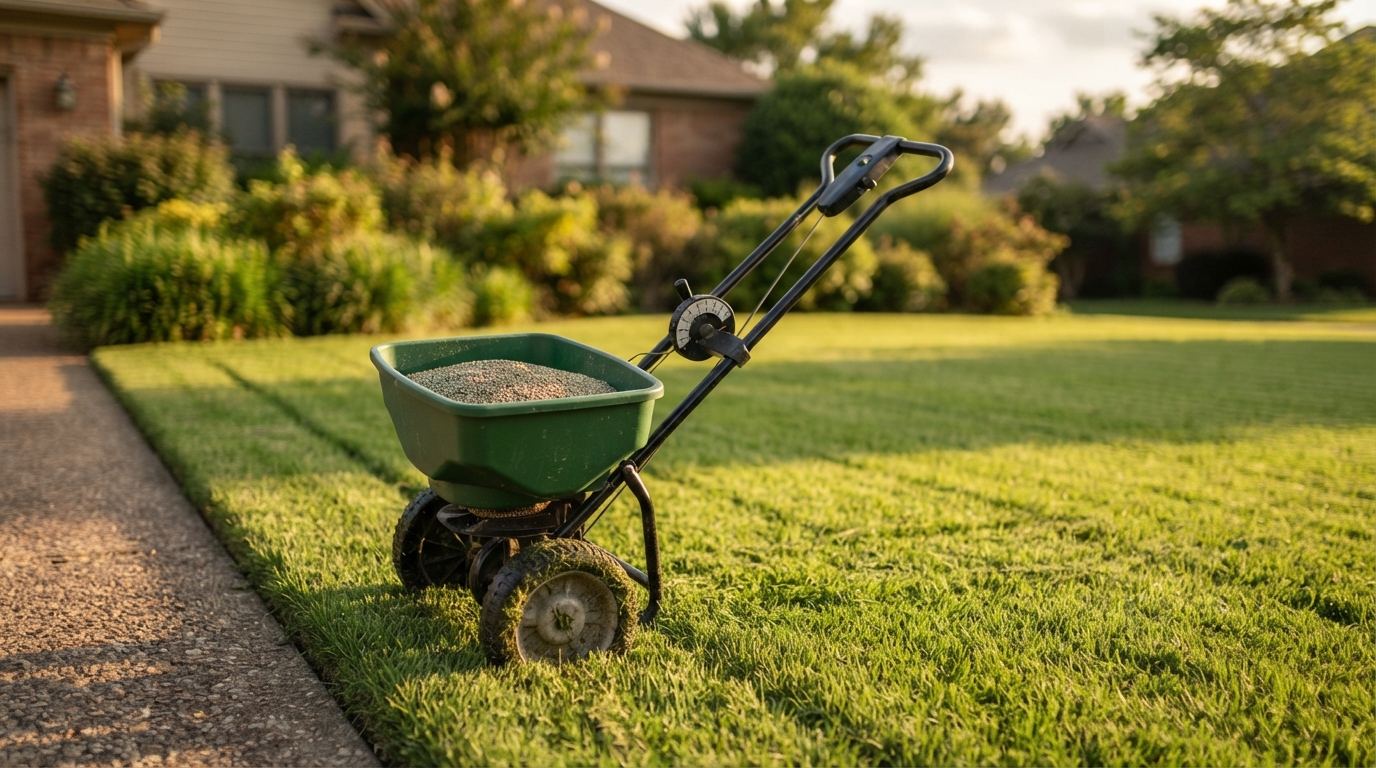
A Spyker spreader is a broadcast or tow-behind lawn application tool built to distribute fertilizer, seed, and ice melt evenly across turf, reducing the striping and waste common with manual spreading. For homeowners and property crews managing anything from a small yard to several acres, matching the right spreader to the job is often the difference between a patchy lawn and consistent, healthy growth.
Uneven product distribution is one of the most common lawn care challenges, and it often results from improper equipment settings rather than application technique alone. A spyker spreader features an adjustable dial system that allows operators to control application rates for different materials, including granular fertilizer, grass seed, and winter ice melt. This level of precision is important because broadcast spreaders distribute materials across a wide area, and incorrect settings can lead to overapplication or uneven coverage on lawns, driveways, and other surfaces. Learn More About ProSolutions to explore professional lawn care equipment and spreading solutions designed to improve application accuracy, efficiency, and consistency for landscaping and property maintenance professionals.
Matching Spreader Type to Lawn Size and Terrain
Not every lawn calls for the same equipment. Push broadcast models work well for standard residential lots, while tow-behind units suit larger properties serviced with a mower or utility vehicle.
- Push broadcast spreaders : Suited to lawns under roughly half an acre where maneuvering around beds and walkways matters.
- Tow-behind spreaders : Built for larger properties, fields, and landscaped acreage, and designed to pair with lawn tractors or utility vehicles to cut application time.
- Handheld or shaker spreaders : Practical for spot treatments near trees, fence lines, or tight edging where a wheeled unit cannot reach.
Selecting the correct category reduces the number of passes needed and helps keep product off hardscapes, which lowers both cost and runoff risk.
Calibration and Application Timing
Calibration is the step most often skipped, yet it is what keeps application rates consistent from one pass to the next. A simple method involves measuring a known area, weighing out the recommended product amount for that square footage, and adjusting the spreader’s dial until the material runs out at the right point.
Timing also affects outcomes. Guidance summarized in a regional watershed column notes that cool-season lawns grow vigorously in spring and fall, not midsummer heat, and EPA guidance suggests timing feeding to coincide with active growth. The same source cautions that fertilizer should never be spread before rain, since a storm soon after application washes soluble phosphorus off the surface at far higher concentrations than usual. Keeping product off impervious surfaces is part of standard watershed protection practice outlined by the EPA’s nonpoint source program, which addresses how application management and calibration reduce nutrient runoff.
Maintenance Habits That Extend Equipment Life
A spreader that is cleaned and stored correctly holds its calibration longer and resists corrosion from fertilizer salts.
1. Rinse the hopper and gearbox housing after each use, especially after spreading ice melt or fertilizer.
2. Dry metal components before storage to prevent rust on gears and frame hardware.
3. Check tires, deflector shields, and the rate-gate mechanism each season for wear.
4. Store the unit indoors or under cover when not in use across the USA’s varied regional climates.
These habits are consistent with manufacturer guidance for commercial-grade broadcast spreaders and help preserve the accuracy of the calibration dial over repeated seasons.
Spreader Comparison at a Glance
|
Spreader Type |
Best For |
Typical Capacity Range |
Key Consideration |
|
Push Broadcast |
Residential lawns |
50-80 lb hopper |
Maneuverability around beds |
|
Tow-Behind |
Large properties, acreage |
120-175 lb hopper |
Requires a mower or utility vehicle |
|
Handheld/Shaker |
Spot treatment, edging |
5-25 lb capacity |
Best for tight or irregular areas |
Published equipment details referencing View ProSolutions on Google Business Profile list spreader products within these general categories, including push, tow, and hand models.
Frequently Asked Questions
What materials can a Spyker spreader apply? Broadcast models are commonly used for granular fertilizer, grass seed, and ice melt, with the dial setting adjusted to match each material’s density and flow rate.
How often should a spreader be calibrated? Recalibration is recommended whenever switching to a new fertilizer or seed product, since particle size and density change how material flows through the gate.
Is a tow-behind or push spreader better for a typical yard? Push models suit most standard residential lots, while tow-behind units are intended for larger acreage serviced with a mower or utility vehicle.
Does lawn fertilizer timing really affect runoff risk? Yes; applying fertilizer ahead of heavy rain increases the chance that nutrients wash off the lawn rather than absorbing into the soil.
A Spyker spreader can make lawn care more efficient when paired with the right equipment, proper calibration, and consistent maintenance. Choosing a model that matches your property size and application needs helps achieve more uniform coverage while reducing product waste. Explore ProSolutions on Google Maps to view business information, contact details, and directions.
