Hardscape should meet turf and planting areas with deliberate transitions that account for elevation, drainage, irrigation, edging, and how people will use the surrounding space. When those details are planned during hardscape installation, patios and walkways can feel integrated into the landscape rather than appearing like separate surfaces added afterward.
The edge where a paver patio meets turf or a planting bed may seem like a small design detail, but it can affect both appearance and function. That transition deserves attention during the larger landscape plan.
Why Do Hardscape Transitions Matter?
A backyard may contain several different surface types: pavers, turf, planting beds, concrete, and other landscape areas. Each performs a different role.
Problems can arise when their meeting points are treated as an afterthought.
For example, an abrupt height difference between a patio and adjoining turf can make the transition feel awkward. A planting bed positioned beside hardscape without considering drainage or irrigation can also complicate the larger layout.
Good hardscaping considers what happens at the edges, not only in the center of the patio or walkway.
Should Turf and Hardscape Be at the Same Height?
The finished elevations should be coordinated, but they do not necessarily need to be identical.
The appropriate transition depends on the materials, grading, drainage, and how the edge will be used. A patio adjoining turf has different requirements from a walkway bordering a raised planting area.
What matters is avoiding accidental elevation changes.
During landscape installation, contractors need to consider the finished height of each material before establishing the surrounding grades. Planning those elevations together can create a cleaner transition and help avoid treating turf or planting areas as spaces that simply fill whatever is left over.
How Does Drainage Affect the Transition?
Water movement should be considered before a hardscape edge is finalized.
A patio or walkway changes the surface through which water can move. Surrounding grades, planting areas, and turf can all influence where that water travels next.
That makes several questions important:
-
Where does water naturally move across the yard?
-
How does the hardscape affect that route?
-
Is the adjoining area turf, soil, or another paved surface?
-
Does irrigation operate near the hardscape?
-
Are there changes in elevation nearby?
The answers depend on the individual property.
This is why drainage should be evaluated as part of the overall landscape rather than assuming water will simply move from the pavers into the nearest planting area.
How Should Planting Beds Meet a Patio or Walkway?
Planting beds can soften the visual edge of a hardscape and create separation between paved and open areas.
Their shape should relate to the geometry of the surrounding surfaces.
For instance, a highly structured patio with straight edges may transition naturally into clearly defined beds. A different layout may use softer lines where planting areas meet the hardscape.
Neither approach is automatically better.
The important part of hardscape landscaping is making those relationships intentional. Planting areas should have enough space to function as part of the landscape rather than becoming narrow leftover strips created around the patio.
What Role Does Edging Play?
Edges help establish where one landscape material ends and another begins.
Depending on the design, a defined edge can separate pavers from turf or help distinguish a planting area from a walkway. Visual definition can also make the finished landscape easier to understand.
However, homeowners should avoid assuming that every transition needs a dramatic border.
Sometimes a subtle change between materials provides enough definition. In other cases, a more noticeable edge can strengthen the layout.
The decision should support the overall design rather than adding detail simply for decoration.
How Should Irrigation Be Coordinated With Hardscape?
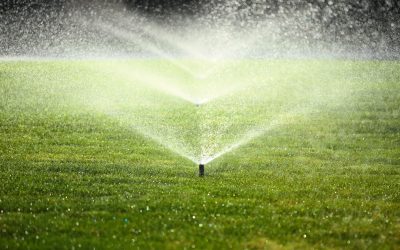
Irrigation planning is especially important where planted or turf areas sit beside paved surfaces.
If irrigation lines need to serve landscape areas on opposite sides of a walkway or patio, those routes should be considered before the custom hardscape installation is completed.
Otherwise, a newly installed hardscape can become an obstacle between areas that still need to be connected.
Homeowners planning Custom hardscape installation in Peoria, AZ can benefit from considering irrigation, turf, planting zones, patios, and walkways within the same overall layout.
That does not mean every irrigation component needs to run underneath the hardscape. It means those relationships should be understood before the permanent surfaces are finalized.
Should Turf Follow the Shape of the Hardscape?
Not automatically.
A common mistake in backyard planning is designing the patio first and then allowing turf to occupy whatever shape remains.
This can create narrow strips, difficult corners, or irregular areas that do not contribute much to the finished design.
Instead, hardscape and turf areas should be planned together.
Consider how each space will function:
-
Is the turf intended as an open activity area?
-
Does it create visual separation between hardscape features?
-
Should it connect two portions of the yard?
-
Is the shape practical for the overall design?
-
How will irrigation relate to its boundaries?
Thinking through those questions can produce a more cohesive landscape than allowing one material to dictate every other area.
Can Hardscape Help Frame Planting Areas?
Yes. Patios and walkways can establish strong boundaries that help organize planting areas.
For example, a walkway may separate a planting zone from an open turf area while providing a clear route through the backyard. A patio edge may establish one side of a planting bed without requiring another large structural feature.
These relationships can help the yard feel organized without introducing unnecessary barriers.
The goal of hardscape landscaping is not to make every boundary obvious. It is to create enough definition that different areas feel purposeful.
What Should Be Planned Before Installation?
Before materials are installed, homeowners should look at the whole backyard rather than each surface independently.
Questions worth resolving include:
-
Where will the main patio and walkways be located?
-
Where should turf or other open areas remain?
-
Which areas will contain planting?
-
Where does irrigation need to travel?
-
How will water move through the property?
-
What finished elevations need to connect?
-
How will people move between each area?
Those decisions influence one another.
A change to the patio footprint may alter the turf shape. Moving a walkway may affect irrigation. Expanding a planting bed may change how the hardscape edge should be treated.
This is why hardscape installation works best when it is coordinated with the larger landscape plan.
The Best Transitions Feel Intentional
The point where pavers meet turf or planting areas should not feel like the place where one contractor’s work simply stopped and another material began.
Thoughtful transitions account for grade, drainage, irrigation, edges, shape, and the purpose of each adjoining space.
For homeowners planning a backyard in Peoria, AZ, coordinating these details during the broader landscape installation can help patios, walkways, turf, and planted areas function as one connected outdoor environment.
Successful hardscaping is not only about selecting attractive materials. It is also about understanding how those materials meet—and support—the rest of the landscape.