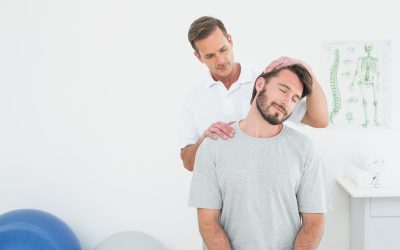
Short-term relief is one thing. Long-term change is another.
Many people in San Carlos first notice a spinal issue as stiffness after sitting, recurring tension between the shoulders, or low back pain that flares after workouts or lifting. A chiropractic visit may help reduce discomfort, but lasting improvement often requires more than passive care alone. That’s where chiropractic rehabilitation exercises come in, especially when the goal involves posture, movement control, and long-term spinal correction.
This explains how corrective chiropractic care and spinal alignment therapy can work alongside rehabilitation exercises to help the body maintain better alignment, reduce recurring strain, and move more efficiently over time.
Why Spinal Correction Often Requires More Than One Approach
The spine does not function by itself. It responds to how you sit, how you breathe, how you walk, and how you load your body during work and exercise. Even if spinal joints begin moving better after care, daily habits can pull the body back into old patterns.
Common examples include:
• Sitting with a rounded upper back and forward head posture
• Driving long distances with hips locked in flexion
• Repetitive lifting or carrying on one side
• Training volume increases without adequate mobility or recovery
Because posture and movement patterns are learned and repeated, long-term spinal correction usually requires both improving joint motion and teaching the body how to stabilize that motion during real life.
What “Spinal Alignment Therapy” Typically Aims To Do
Spinal alignment therapy is often used as a general term for care intended to improve how the spine stacks, moves, and bears load. This can include restoring mobility in restricted joints, decreasing tension in overworked muscles, and improving the coordination between the spine, pelvis, and shoulders.
A key point: alignment is not only about how something “looks.” It’s also about how well the body controls posture during activity. Someone can look “straight” while still moving with compensation, stiffness, or poor mechanics.
That’s why corrective approaches frequently pair hands-on care with active exercise strategies.
How Corrective Chiropractic Care Fits Into Long-Term Change
Corrective chiropractic care typically focuses on identifying movement imbalances that contribute to recurring discomfort, ften involving the spine, pelvis, hips, shoulders, and upper back. Instead of only responding when pain flares, corrective care aims to improve function and reduce the likelihood of repeating the same strain cycle.
Corrective care may be appropriate when someone notices patterns like:
• Pain that keeps returning after brief relief
• One-sided tightness (one hip or shoulder always feels “off”)
• Stiffness that limits exercise, work tasks, or sleep
• Posture fatigue (feeling like you can’t “hold yourself up” comfortably)
In many cases, chiropractic care can help improve mobility, while rehabilitation exercises help maintain those changes and build better support.
Why Rehabilitation Exercises Matter For Spinal Correction
Rehabilitation exercises are where the body learns to “own” new movement patterns. If mobility improves but stability and endurance don’t, the nervous system often defaults back to what it knows, especially under fatigue or stress.
Chiropractic rehabilitation commonly supports spinal correction by improving:
• Motor control: teaching the body to move without compensating
• Stability: helping key muscles support joints during activity
• Endurance: building the ability to hold posture over time
• Mobility where needed: restoring range of motion in stiff regions
The goal is not to make every exercise complicated. The goal is consistency, progression, and relevance to the person’s lifestyle.
Examples Of Rehab Targets That Support Better Alignment
While each plan should be tailored to the individual, many long-term spinal correction programs focus on a few predictable areas.
Core And Pelvic Stability
When the pelvis is unstable, the lower back often works overtime. Exercises that improve deep core activation and glute support may help reduce strain and improve spinal mechanics during lifting, walking, and workouts.
Upper Back And Shoulder Blade Control
Rounded shoulders and a forward head posture can increase neck and upper back tension. Strengthening the mid-back and improving shoulder blade control can support posture and reduce the load on the neck.
Hip Mobility And Hip Strength
Restricted hips frequently drive low-back compensation. Improving hip extension and rotation, then strengthening through that range, often supports more efficient movement and less irritation.
Breathing And Rib Mobility
Breathing mechanics can influence posture and spinal tension. Improving rib mobility and diaphragmatic breathing patterns may help reduce excessive neck and upper-back recruitment.
How Long-Term Correction Builds Over Time
Spinal correction is often more like training than treatment. Progress is usually measured in milestones such as:
• Fewer flare-ups during the week
• Less morning stiffness
• Improved tolerance for sitting, driving, or standing
• Better recovery after sports or workouts
• Increased confidence in movement
Most people notice that consistency beats intensity. A small set of exercises done regularly, combined with movement education and periodic reassessment, can be more effective than a long list done inconsistently.
Practical Habits That Support Rehab Success
For many San Carlos residents balancing work, commuting, and activity, these habits help support long-term results:
• Take short movement breaks every 45–60 minutes of sitting
• Warm up hips and upper back before workouts
• Alternate carrying loads (bags, kids, equipment) instead of staying one-sided
• Reduce “one big day” overload by spreading activity through the week
• Prioritize sleep and hydration to support tissue recovery
These aren’t “perfect posture” rules, they’re realistic ways to reduce repetitive strain.
Where To Learn More About Corrective Exercise Support
For those exploring conservative care options that combine chiropractic care with exercise-based rehabilitation, Bayside Chiropractic shares information related to corrective approaches, including corrective exercise therapy.
When chiropractic rehabilitation exercises are used alongside spinal alignment therapy, they can help the body maintain improvements, reduce recurring stress patterns, and support long-term spinal correction, especially for people who want to stay active and resilient in everyday life.